If you’re thinking about getting a new website, chances are you’ve had the same thought most people do:
“I should probably get a few things together before I speak to a designer.”
That instinct is right. But the good news is you don’t need a perfect brief, polished copy, or a crystal-clear vision before reaching out.
A little preparation goes a long way, and it makes the whole process smoother, quicker, and far less stressful.
Here’s what’s genuinely helpful to have in mind before working with a web designer, and what you can safely stop worrying about.
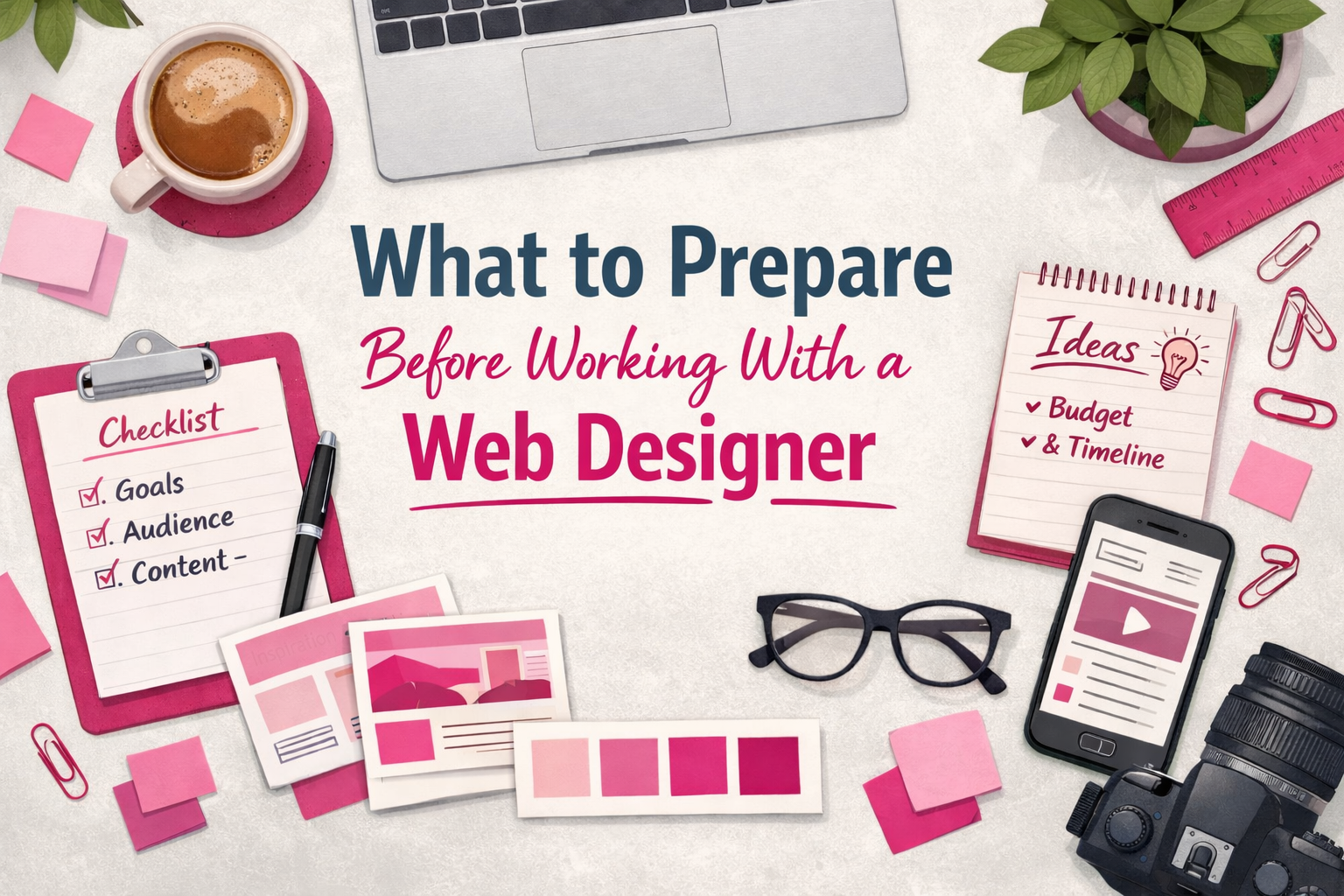
1. Be clear on what you want the website to do
Before thinking about colours, layouts, or features, start with the purpose.
Ask yourself:
- Is the site mainly there to generate enquiries?
- Do you want people to book appointments online?
- Is it about building credibility and trust?
- Are you planning to grow or add new services soon?
You don’t need a long list. Even one or two clear goals help shape the entire project and stop the website becoming a collection of random pages.
A good designer will use this to guide structure, layout, and calls to action.
2. Have a rough idea of who the website is for
You don’t need a full customer persona, but it helps to know who you’re speaking to.
Think about:
- Who you most want to attract
- What they might be worried about before contacting you
- What would make them feel confident choosing you
If your answer is “everyone,” that’s completely normal, but narrowing it down slightly makes a huge difference to how effective the site is.
Your designer can help refine this, but having a starting point keeps things focused.
3. Know what content you already have
Content often causes the biggest delays in website projects, so it’s useful to know where you stand.
Helpful things to consider:
- Do you have existing website copy you want to reuse or improve?
- Do you have brand photos, or will you need new ones?
- Do you already know what services or pages you need?
You don’t need everything finalised, but knowing what exists and what doesn’t helps your designer plan realistically and avoid bottlenecks later.
4. Collect a few website examples you like
This isn’t about copying other sites. It’s about understanding what you’re drawn to.
Try to save a few examples and note what you like about them, such as:
- Clean and simple layouts
- Bold typography
- Calm, minimal design
- Clear booking or enquiry journeys
Even saying “I like how easy this feels to use” or “this looks professional but not corporate” is incredibly helpful feedback.
5. Have a rough budget and timeline in mind
You don’t need an exact number, but a ballpark budget helps your designer recommend the right approach.
The same goes for timing. Whether you’re aiming for a quick launch or planning ahead for later in the year, sharing this early avoids mismatched expectations.
Being upfront here doesn’t lock you in. It simply helps shape sensible options.
What you don’t need before reaching out
This is the part many people are relieved to hear.
You do not need:
- Finalised copy
- Perfect images
- Technical knowledge
- A fully formed site map
- All decisions made upfront
That’s what the process is for.
A good web designer will help you clarify ideas, guide decisions, and fill in the gaps without overwhelming you.
Final thoughts
Preparing a few key things before working with a web designer sets the project up for success, but perfection is not the goal.
If you know roughly what you want the site to achieve, who it’s for, and where you’re starting from, that’s more than enough to begin.
If you’re thinking about a new website and not sure where to start, I’m always happy to talk things through and help you figure out the next steps.
Sometimes that conversation is the hardest part. Once that’s done, everything else tends to fall into place.